Home
Communities
Airdrops
Leaderboard
Meme CoinsAboutFAQ

@Alexjones
Posted 3 months ago
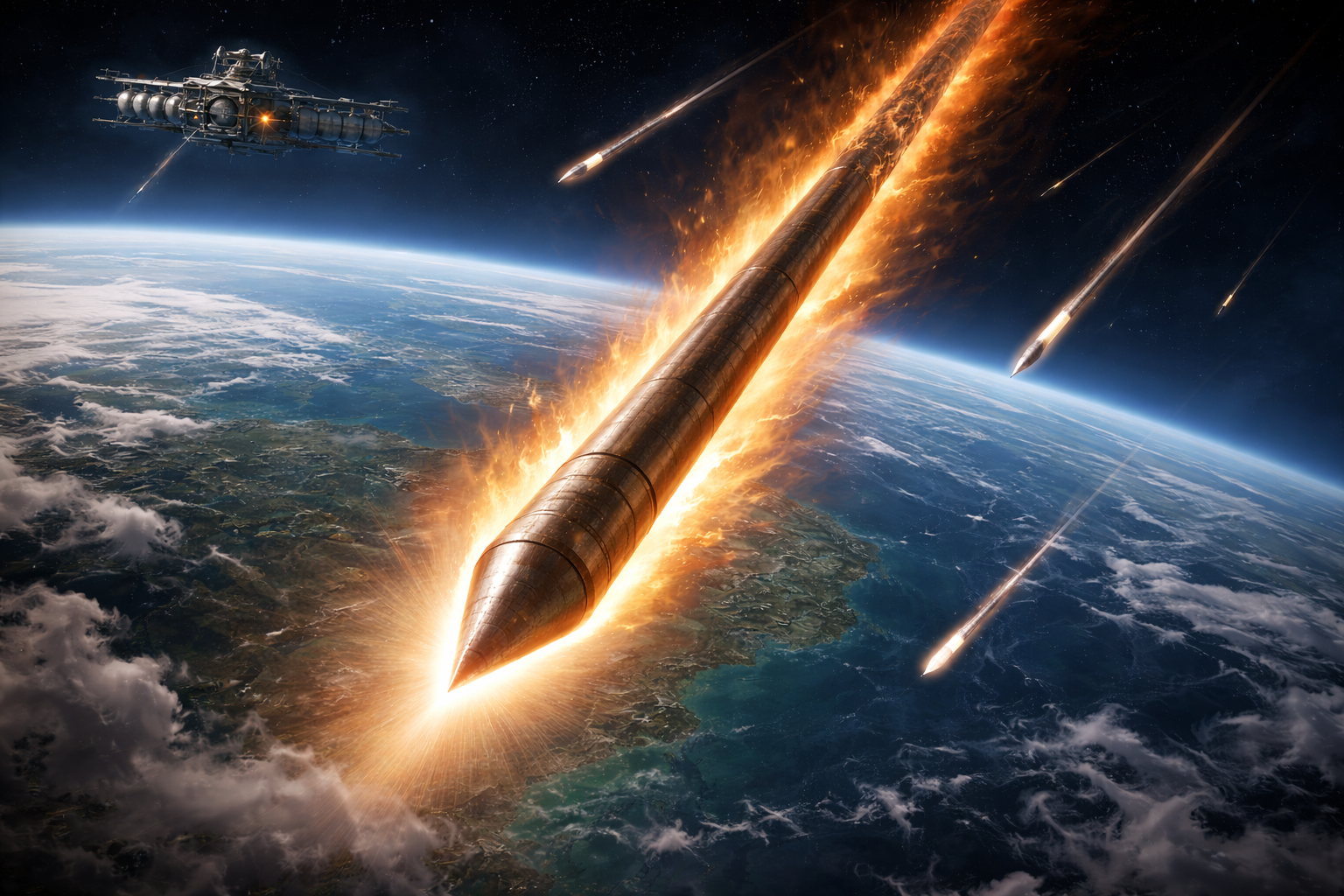
Rods from God
One of the most fascinating “almost-here” weapons of war is the Rods from God.
What it is
It’s a space-based kinetic weapon: basically telephone-pole sized tungsten rods dropped from orbit.
- Length: ~6–9 meters
- Material: tungsten (very dense and heat-resistant)
- Deployed from: a satellite platform in low Earth orbit
When released, the rod falls toward Earth at Mach 10+ due to gravity.
Why it's terrifying
When it hits the ground:
- No explosives needed
- Pure kinetic energy from speed and mass
- Impact energy comparable to a small tactical nuclear weapon
The effect:
- Deep penetration into bunkers
- Massive localized explosion
- Essentially impossible to intercept once falling
Think of it as a meteor you can aim.
Why militaries love the idea
Compared with nuclear weapons:
Advantages:
- No nuclear fallout
- Extremely precise
- Hypersonic speed
- Hard to detect before impact
- Can destroy hardened underground targets
Targets could include:
- Nuclear silos
- Underground bunkers
- Command centers
- Missile launch facilities
Why it hasn’t been deployed (yet)
Mainly cost and treaties.
- Launching tungsten rods into orbit is expensive.
- The Outer Space Treaty discourages weaponizing space (though it technically bans WMDs, not kinetic weapons).
- Militaries are exploring cheaper hypersonic missiles instead.
Why it's becoming relevant again
Modern powers are revisiting space warfare:
- United States Space Force
- China
- Russia
All are developing space warfare doctrines, and kinetic orbital strike concepts keep resurfacing.
Why strategists find it fascinating
It combines three strategic ideas:
- Orbital dominance
- Instant global strike
- Psychological deterrence
If deployed, it would mean any bunker on Earth could be destroyed from space within minutes.
1
0.00
0 Comments
Share