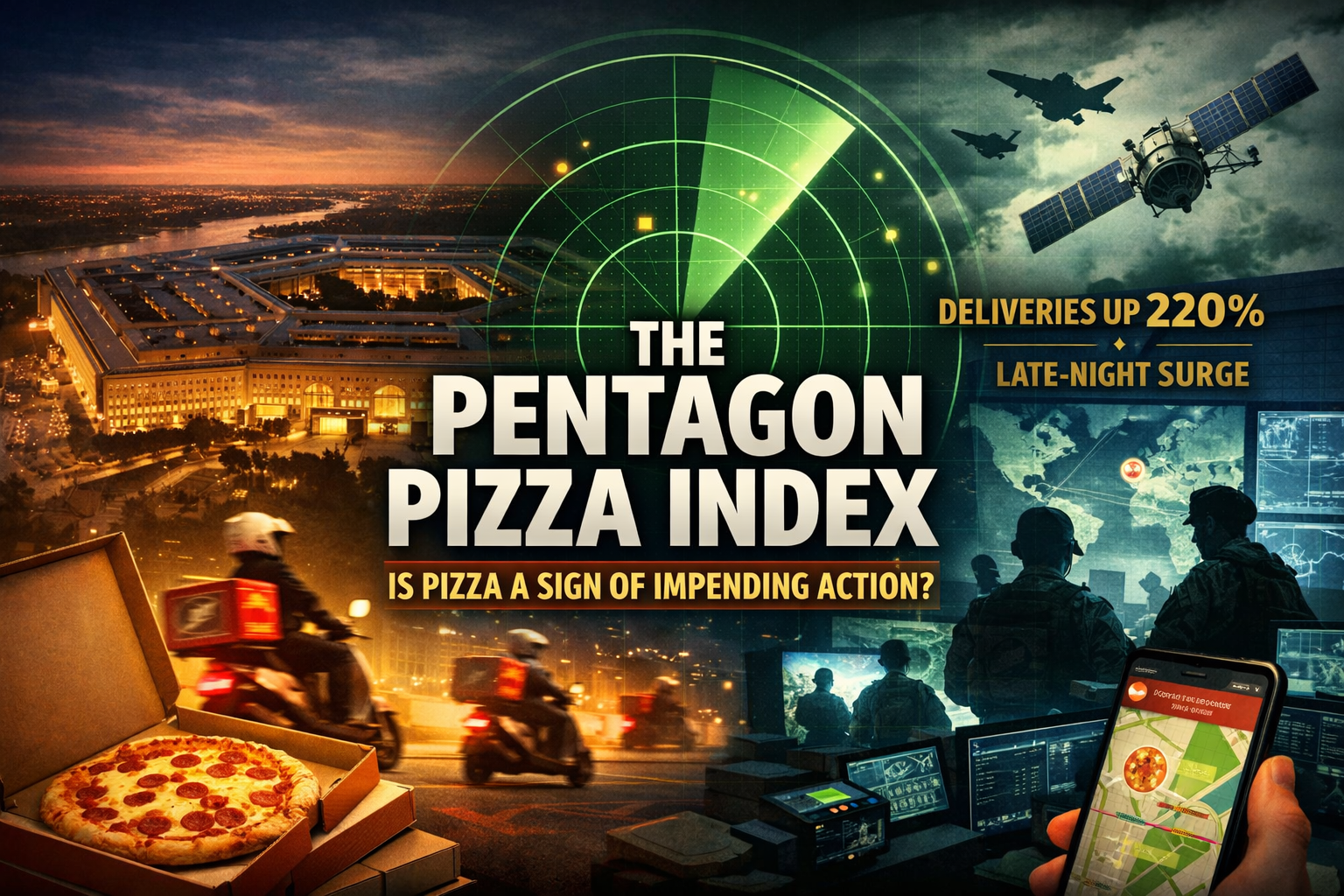
In the strange world of geopolitics and open-source intelligence (OSINT), some of the most revealing signals aren’t satellites or leaked documents, they’re pizza boxes.
The Pentagon Pizza Index is an informal, half-serious indicator suggesting that sudden spikes in pizza deliveries to the Pentagon may precede major U.S. military or geopolitical events. While it sounds absurd, the idea has persisted for decades, and not without reason.
The Origin of the Index
The concept dates back to the Cold War, when journalists and intelligence watchers noticed a curious pattern:
whenever the Pentagon was gearing up for something big, nearby pizza shops got very busy, very late at night.
Notable moments where pizza activity allegedly spiked:
- 1991 Gulf War – unusually high late-night food orders before airstrikes began
- Post-9/11 period (2001) – nonstop overnight activity during crisis coordination
- Various military escalations and emergency briefings over the years
The logic is simple: When senior defense officials are locked in secure rooms for hours, they don’t go home, they order food.
And pizza, being fast, cheap, and shareable, became the go-to fuel of crisis response.
How the Pentagon Pizza Index “Works”
Modern observers don’t rely on insider leaks. They use open-source signals, such as:
- Google Maps “busyness” data near Pentagon-area pizza shops
- Delivery app traffic patterns
- Late-night spikes in activity from establishments that usually slow down after hours
A sudden, unexplained surge, especially outside normal workdays, can suggest:
- Emergency meetings
- Classified briefings
- Rapid response planning for unfolding events
It’s not about the pizza itself, it’s about human behavior under pressure.
OSINT Folklore vs. Real Intelligence
To be clear:
The Pentagon Pizza Index is not a scientific or official intelligence tool.
Major limitations include:
- False positives (training exercises, drills, budget deadlines)
- No consistent data source
- Correlation does not equal causation
That’s why professionals treat it as OSINT folklore, a humorous but occasionally insightful example of how indirect signals can reflect real-world activity.
Still, it highlights a powerful idea: Large systems leak information through small, mundane behaviors.
Why People Still Pay Attention
Despite its flaws, the Pentagon Pizza Index remains popular because it demonstrates:
- How open data can hint at hidden actions
- The value of tracking behavioral patterns, not just official statements
- Why intelligence isn’t always about secrets, sometimes it’s about watching routines break
It belongs to the same family of alternative indicators as:
- Shipping traffic anomalies
- Unusual flight patterns
- Satellite imagery of nighttime lights
- Social media activity drops or spikes among officials
None are definitive alone, but together, they form a picture.
The Bigger Lesson
The Pentagon Pizza Index isn’t about predicting war with mozzarella and pepperoni.
It’s about understanding second-order signals, the quiet side effects of power moving behind closed doors.
In a world flooded with noise, sometimes the most interesting clues are the ones no one bothered to hide.