In 2025, global power doesn’t shift through war - it shifts through servers, supply-chains, and stories. Every major state is now an empire of systems - the economic, technological, cultural, military, and resource systems. The real contest isn’t who fires the first missile, but who controls the choke-points that shape money, data, and perception.
ECONOMY 📉
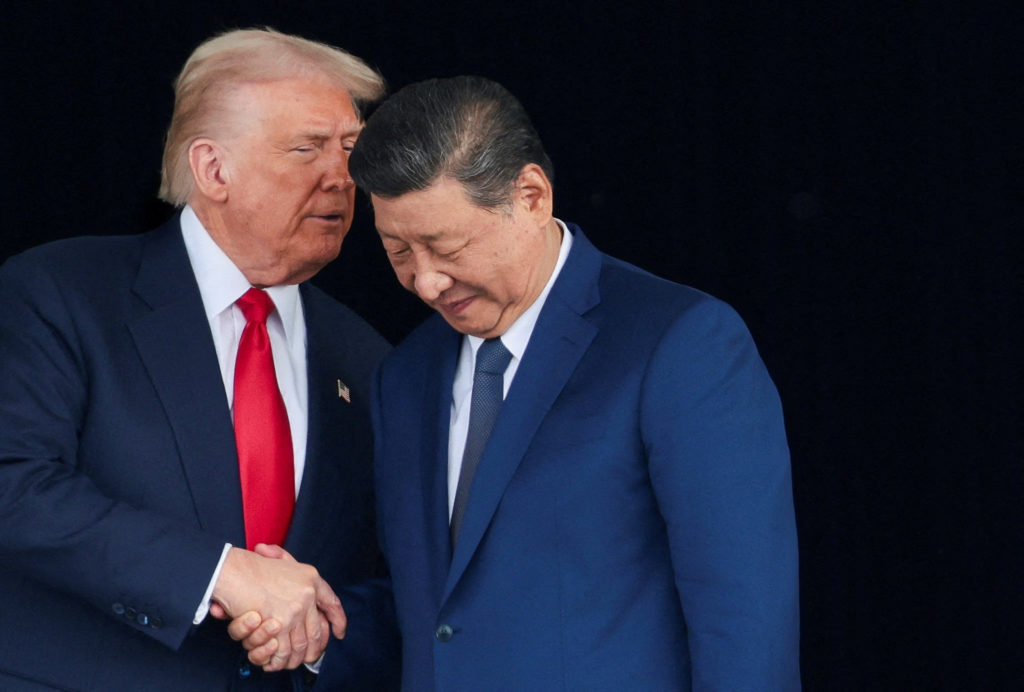
The October meeting between Trump and Xi in Busan shook the table. Trump announced a tariff rollback - U.S. tariffs on Chinese goods set to fall to ~47% from ~57% after their talks. China agreed to resume large-scale U.S. soybean imports and delay its rare earth export restrictions.
Effectively, China and the U.S. reached a truce - one year term on key issues, but not a full reset.
Leverage systems here now shift: The U.S. still owns global clearing, but China hedges with rare-earth reserves and manufacturing scale. What changed: both sides acknowledged the cost of full escalation - and chose a managed engagement instead.
TECHNOLOGY
Compute is territory. Chips are oil. The meeting signalled a tactical easing: China allowed rare-earth pathways to stay open, U.S. signalled willingness to talk chips with Chinese firms like Nvidia.
This means the U.S. retains the design & cloud node dominance; China retains manufacturing and resource leverage. The underlying race continues - but the pace may shift because both sides just bought a little breathing room.
CULTURE / MEDIA
Influence still flows through narrative. The meeting undercut some of the heightened tension narrative - markets soared, optimism returned. Yet the deeper battle remains: who sets the algorithms, who owns the story. China used the summit to push a “global inclusive trade” narrative (Xi’s speech post-meeting).
In short: a moment of de-escalation, but no reset of narrative dominance.
MILITARY / STRATEGY 🪖
Hard power underwriting becomes less about direct confrontation, more about layered deterrence. The meeting signals that even in the “great rivalry,” both sides prefer calibration over crash. Russia watches - and maybe will exploit the cracks while America and China step back from full confrontation.
RESOURCES
Rare earths: China’s deferral of tough export curbs signals it holds the leverage. The U.S. gets a short-term win on soybeans and tariff softness - but long-term resource control remains uncertain. The meeting reinforced that resources are still trapped in geopolitical flows and you don’t win those overnight.
CROSS-CUTTING ARENAS: AI, CRYPTO, CYBERSECURITY
The meeting impacted these too. With trade tension eased slightly: AI export controls may loosen or become more unpredictable; crypto/finance sanctions corridors gain a little more breathing room; cybersecurity remains front line of hidden war. Micro-moves (policy tweaks, export permit changes, cloud region lockdowns) will now matter even more because both superpowers just signalled a “pause.”
RUSSIA'S COUNTER-PLAY 🇷🇺
Russia now sees a breathing space between the U.S. and China. It can exploit the U.S.’s diverted attention from China, seek new deals with China (or decoupling options), or push influence where U.S.-China focus is softer. The meeting tells Russia: you still are the wildcard. Use energy, cyber, opportunism. Don’t front the race - you exploit the frays.
WHAT YOU, THE GAMBLER, SHOULD WATCH 😎
Spot micro-moves:
- The actual final text of U.S.-China export-control tweaks on chips and rare earths.
- Any shift in Chinese purchase commitments (soybeans, industrial inputs).
- Cloud-region build announcements in China or U.S. with dual-use defense potential.
- A sudden surge in AI startup M&A in China or U.S.-that often signals control grabbing.
Liquidity & sentiment triggers: - Markets reacting to the tariff cut announcement-if yield curves move, capital flows shift.
- A sudden Chinese resource-processing deal with third countries post-meeting.
- Social media narrative surge: “truce,” “reset,” “cooperation” - these reduce risk premia.
WHICH POWER STILL LEADS AND HOW THIS MEETING CHANGES THE CALCULUS
The U.S. remains the strongest vehicle for global dominance-by-proxy: cultural hegemony, dollar liquidity, alliance networks. China remains the challenger, with manufacturing muscle, resource control, and rising tech - but riskier. The meeting suggests China is comfortable anchoring a parallel orbit rather than overt takeover. Russia sits as disturbance-agent: weaker economy but high leverage in hybrid conflict.
–
Hacks are inevitable - even AI can’t prevent them. Most realize the need for security only after it’s too late. Don’t be one of them. Protect your digital life now -use the most secure phone, laptop, and VPN.