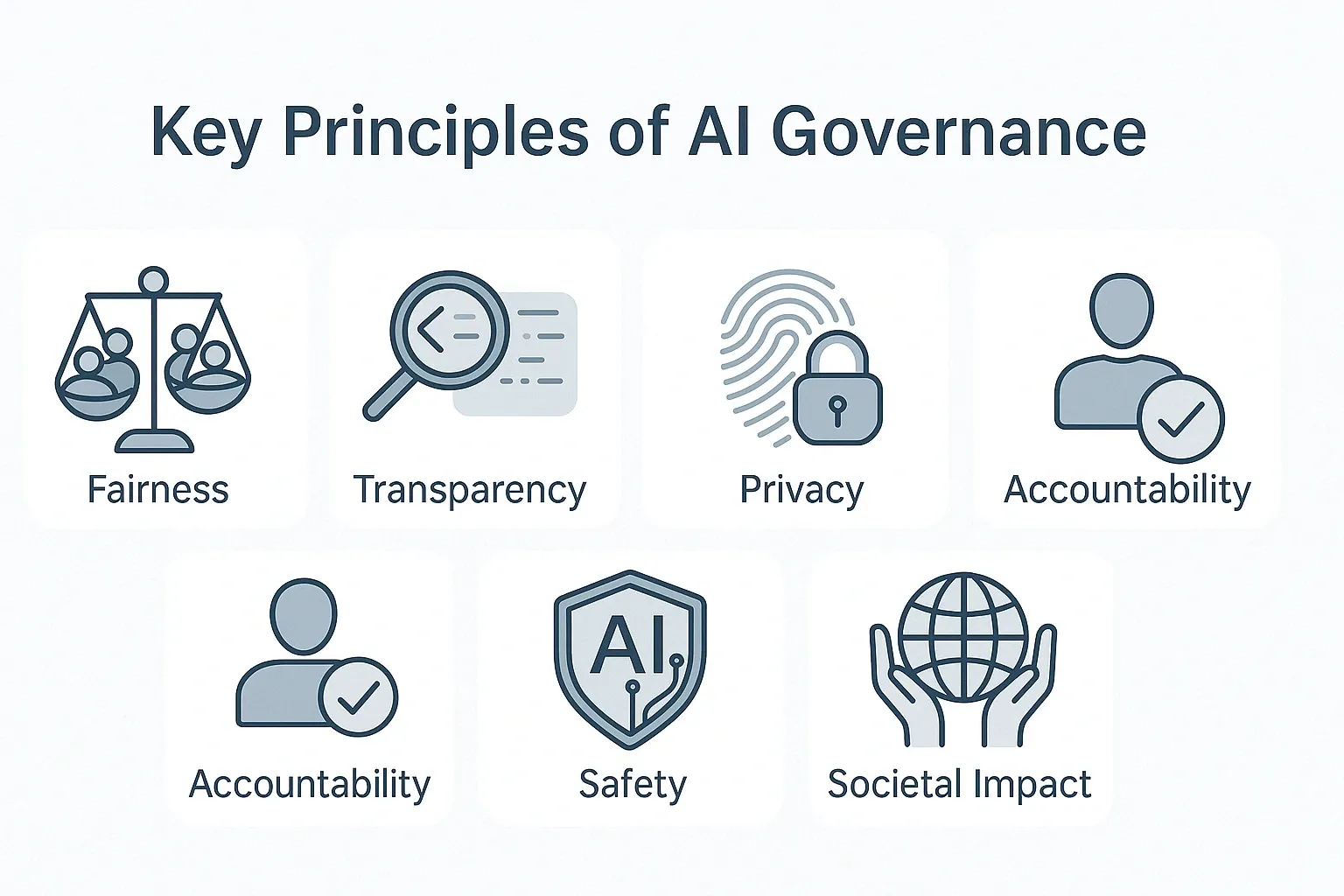
Artificial intelligence promises transformative benefits, but its rapid growth has created a complex governance challenge. Effectively managing AI isn’t just a matter of investment, it requires carefully designed policies, accountability structures, and risk assessment frameworks to balance innovation with safety and ethical use.
There is no one-size-fits-all solution. Organisations and regulators must navigate trade-offs between enabling AI’s potential and mitigating harms such as bias, misuse, and lack of transparency. Simplistic approaches risk overlooking deeper governance challenges, making deliberate planning essential.
Accountability is central. Clear lines of responsibility (both within companies and among regulators) ensure AI systems are deployed responsibly and risks are properly managed. Governance spans multiple layers: technical safeguards like explainability and alignment, organisational processes such as oversight and risk controls, and external regulatory frameworks, each demanding distinct strategies.
In essence, AI governance is a multifaceted endeavor. Success requires more than money, it demands deliberate design, robust oversight, and a careful balance between innovation and ethical responsibility.