
In late February 2026, the United States, in close coordination with Israel, launched one of the most significant military operations in decades against Iran, signaling a dramatic escalation in U.S. foreign policy and military engagement. Dubbed Operation Epic Fury, the campaign targeted Iranian military infrastructure, missile sites, and, according to multiple reports, key leadership figures, including Supreme Leader Ayatollah Ali Khamenei, whose death was later confirmed following airstrikes deep inside Iranian territory.
The initial goals articulated by U.S. leaders were to dismantle Iran’s long‑range missile capabilities, degrade its naval power, and prevent the development or resurgence of nuclear weapons. President Donald Trump has described the campaign as potentially extending weeks beyond an initial four‑to‑five‑week timeframe, emphasizing that the conflict could continue “far longer” if necessary.
Regional Blowback and Broader Strategic Signals
Iran’s response has been swift and multifaceted. Missile and drone attacks have hit U.S. bases and allied facilities across the Gulf, from Bahrain to Qatar, and strike capabilities have extended toward Israel itself. Meanwhile, Iran‑linked hacktivists and proxies pose cyber and low‑level threats, while geopolitical chokepoints like the Strait of Hormuz have been disrupted, threatening global energy markets and supply chains.
This type of broad retaliation, rather than a simple air campaign, reflects the complexity of modern conflict, where direct military strikes can trigger indirect effects across multiple domains.
North Korea’s Reaction and Nuclear Ambitions
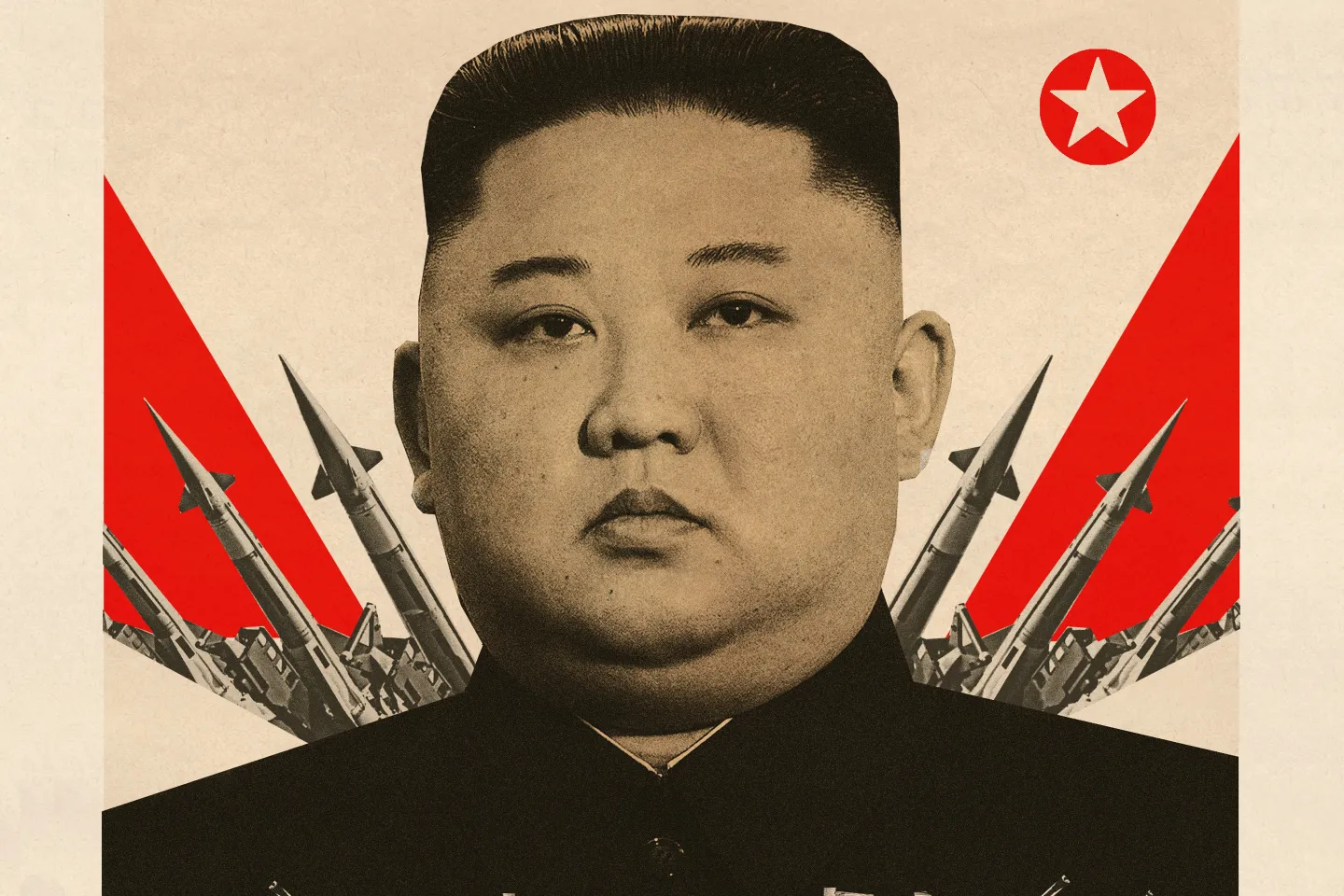
As the Iran conflict intensifies, North Korea has taken notice. Pyongyang’s foreign ministry labelled the US-Israel strikes as “illegal aggression,” decrying them as violations of sovereignty and warnings of “hegemonic” behavior.
Separately, North Korean leader Kim Jong Un has publicly reaffirmed his commitment to expanding the country’s nuclear arsenal and ballistic missile capabilities (including potentially new delivery systems) and insisted that future talks with Washington hinge on the U.S. ending what Pyongyang calls “hostile policies” and recognizing its nuclear status.
While Pyongyang has not issued overt direct threats against the US homeland in the style of earlier escalatory rhetoric, its leadership’s reaction to the Iran strikes (alongside ongoing military parades and statements on bolstering nuclear forces) underscores rising tensions on the Korean Peninsula as a secondary front in great‑power competition.
How Might America Respond If North Korea Escalates?
Unlike the Iran operation, launched from bases in the Middle East and coordinated with regional partners, an American military approach involving North Korea involves multiple strategic and tactical complexities:
1. Geography and Proximity to Allies
North Korea is adjacent to South Korea and near Japan, both key US treaty allies. Any U.S. military action would require tight operational coordination with Seoul and Tokyo, balancing deterrence with avoiding unnecessary escalation that could draw in China or Russia.
2. Missile Defense and Forward Posture
Instead of initial offensive strikes, US strategy is more likely to emphasize missile defense and deterrence, particularly from bases in South Korea and Japan, and from Aegis‑equipped naval vessels in the Sea of Japan and East China Sea. Joint exercises already underway enhance readiness for potential ballistic missile launches and interception operations.
3. Precision and Limited Strikes over Occupation
Drawing lessons from Iran, U.S. planners would probably favor surgical strikes on nuclear and missile infrastructure rather than a full invasion, especially given the dense civilian population of the Korean Peninsula and the catastrophic risks of conventional war. This could include:
- Pre‑emptive strikes on KN‑series ballistic missile sites.
- Cyber operations aimed at disrupting command systems.
- Special operations targeting key proliferation networks.
- Sea‑based Tomahawk cruise missile barrages to suppress air defenses.
These approaches would be designed to limit escalation while degrading Pyongyang’s offensive capabilities.
4. Alliance and Diplomatic Leverage
Military planning would almost certainly be paired with maximum political and economic pressure, including tightened sanctions through alliance frameworks, efforts to isolate North Korea internationally, and diplomatic engagement with China, a crucial gatekeeper for Pyongyang’s economy.
What Would “A Smooth Operation” Look Like?
In contrast to the current Iran theater (where airstrikes rapidly escalated into regional blowback) a smoother transition into conflict elsewhere would require:
- Clear strategic aims: defined goals such as denuclearization benchmarks or missile systems neutralized.
- Pre‑authorized alliances: joint operational planning with South Korea and Japan to minimize misunderstandings.
- Layered deterrence: robust missile defense systems deployed ahead of any strike.
- Precision engagement: limited, intelligence‑driven strikes rather than broad bombardments.
- Diplomatic containment: coordinated sanctions and global messaging to separate Pyongyang from external support.
This model seeks to limit unintended escalation, protect civilian populations, and maintain clear political objectives, all lessons informed by the messy dynamics seen in the Middle East.
Outro
The Iran conflict illustrates how modern military action (even when narrowly framed) can have wide regional and global ripple effects. As tensions with North Korea simmer, Washington’s options range from enhanced deterrence and diplomacy to limited precision strikes if deterrence fails.
Ultimately, U.S. strategic planning in 2026 reflects a hybrid posture: intimidation and pressure backed by calibrated force, embracing operations that avoid protracted occupations but remain capable of decisive action when national security imperatives are judged at stake.

Does North Korea have any ally at all?😂
Iran is abandoned by China and Russia, does North Korea have any allies at all?

Everybody seems scared to be associated with anybody these days. They don't want to be easy targets. Look how the Gulf states are afraid of retaliating and look at how UK is acting.
good, they must not be able to develop long range missiles or were all fucked