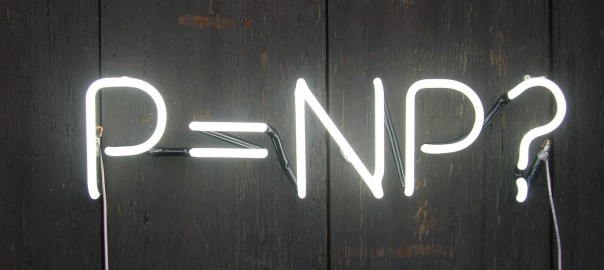
Among all unsolved questions in science, few rival the importance of P vs NP - a problem that asks whether there are fundamental limits to what computers (and intelligence itself) can solve.
At its core, P vs NP asks one deceptively simple question:
If a solution can be verified quickly, can it also be found quickly?
Two Types of Problems
Computer scientists divide problems into two main classes:
1] P (Polynomial time):
--Problems that computers can solve efficiently.
--Examples include sorting data, finding shortest routes, or searching databases.
2] NP (Nondeterministic Polynomial time):
--Problems that are hard to solve but easy to check once a solution is given.
--A classic example is Sudoku: finding the solution is difficult, but verifying it is correct is easy.
The Central Question
Is P = NP or P ≠ NP?
- If P = NP, then every difficult problem with easily checkable solutions can be solved efficiently.
- If P ≠ NP, then some problems are fundamentally hard and always will be.
Most experts believe P ≠ NP, but no one has been able to prove it.
Why It Matters
The consequences of solving P vs NP would reshape civilization.
Cryptography:
Modern encryption relies on problems that are easy to verify but hard to solve. If P = NP, most digital security - banking, military systems, and cryptocurrencies - would collapse.
Artificial Intelligence:
Many AI tasks, such as planning and optimization, are NP-hard. A proof of P = NP would enable near-perfect decision-making and accelerate the path toward artificial general intelligence.
Medicine and Biology:
Drug discovery, protein folding, and cancer treatment depend on solving massive optimization problems. These could become computationally tractable.
Economics and Logistics:
Supply chains, traffic systems, and resource allocation could be optimized with unprecedented precision.
Why It’s So Hard
P vs NP is not about finding one clever algorithm.
It requires proving something about all possible algorithms, including ones that have not yet been invented. It is a question about the limits of computation itself.
This makes it less like solving a puzzle - and more like proving whether puzzles can ever be fully solved.
Status and Legacy
P vs NP is one of the Millennium Prize Problems established by the Clay Mathematics Institute, which offers $1 million for a correct proof.
Despite decades of effort by the world’s best mathematicians and computer scientists, it remains unsolved.
Final Thought
P vs NP is ultimately a philosophical question disguised as mathematics:
Are there problems that intelligence can recognize but never efficiently conquer?
The answer will define the future of security, AI, and human knowledge itself.